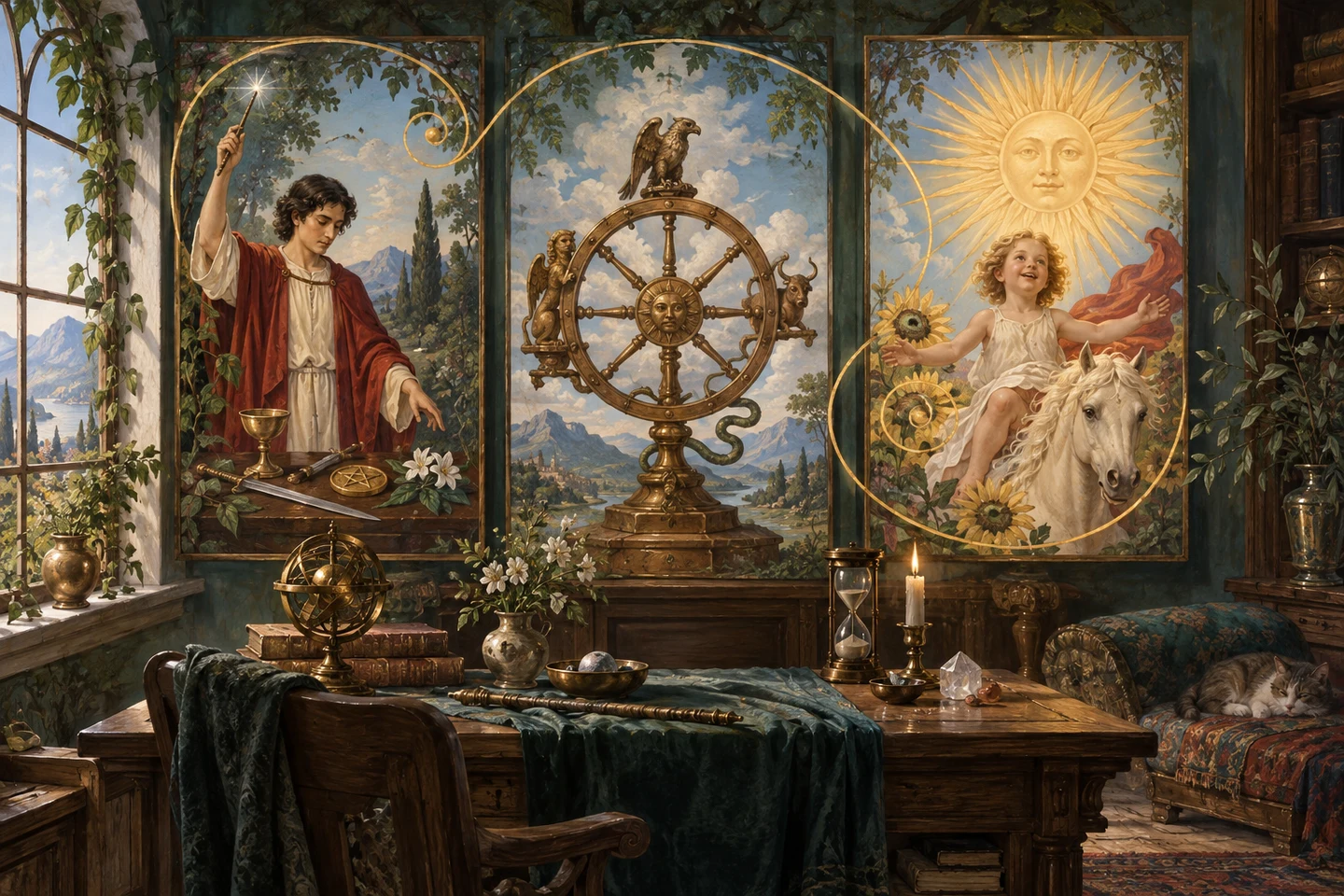
The Magician, Wheel of Fortune and Sun have different messages, but their numbers can be reduced to One. Comparing them as a number family helps you study what they share and where their meanings separate. It can also make a repeated theme easier to recognise in a reading.
This guide uses digit reduction and Rider-Waite-Smith numbering. It follows the introductory method in tarot and numerology. A family is a connection between cards; you still read the actual card drawn, its orientation and its position.
How digit reduction works
Add the digits of the printed number until you reach a single digit. The Wheel is X, or Ten: 1 + 0 = 1. The Sun is XIX, or Nineteen: 1 + 9 = 10, then 1 + 0 = 1. Both join the Magician, numbered I.
For the Star, XVII gives 1 + 7 = 8. For Judgement, XX gives 2 + 0 = 2. The World, XXI, gives 2 + 1 = 3. Roman numerals must first be read as ordinary numbers; counting the letters in XVII would produce a different calculation.
Here Eleven reduces to Two. Numerology systems that preserve Eleven as a master number use another rule. You can study them separately, but decide on your method before interpreting a spread.
The Fool remains Zero in this exercise. Zero is not One and does not become Twenty-Two because the deck contains twenty-two Majors.
Compare the three members of the One family
The same reduced number connects three different experiences. Read the full number and image before deciding how the connection matters.
I: action

The Magician
Available skills and tools can be put to purposeful use.
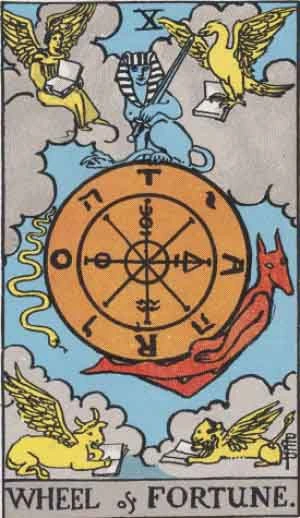
X: changing conditions
Wheel of Fortune
A turn of fortune changes the conditions around your effort.
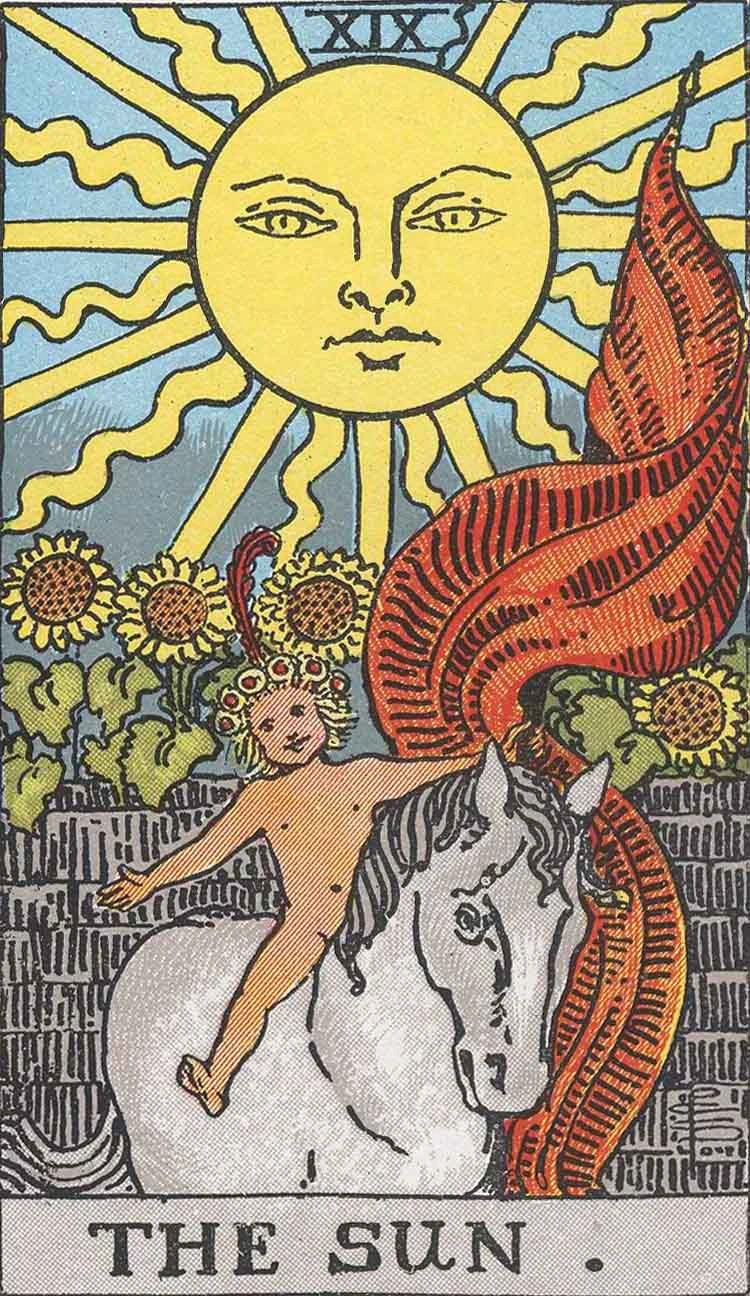
XIX: visible results
The Sun
Clarity and vitality support a favourable development.
Agency and fortune have different roles
The Magician gives a reader something to act on. The Wheel reminds us that conditions also change. The Sun can show a result becoming visible and enjoyable. Their shared One lets you compare these experiences without collapsing them into one meaning.
If the cards appear in a spread, keep the actual positions. A Magician in advice calls for using your skills now; a Sun in an outcome position gives the forecast. Digit reduction does not change those roles.
The nine number families
The table uses Strength at VIII and Justice at XI. In a deck with Justice at VIII and Strength at XI, those two cards change families. The titles and printed numbers in your own deck take precedence.
Scroll sideways to read every column.
| Reduced number | Major Arcana cards | A theme to compare |
|---|---|---|
| 1 | Magician, I; Wheel of Fortune, X; Sun, XIX | Agency, changing conditions and visible vitality. |
| 2 | High Priestess, II; Justice, XI; Judgement, XX | What must be understood, weighed or answered. |
| 3 | Empress, III; Hanged Man, XII; World, XXI | Growth, changed perspective and a completed whole. |
| 4 | Emperor, IV; Death, XIII | An established structure and the change that ends it. |
| 5 | Hierophant, V; Temperance, XIV | Learning from an established teaching and putting different influences together. |
| 6 | Lovers, VI; Devil, XV | Chosen commitments, attraction and binding attachments. |
| 7 | Chariot, VII; Tower, XVI | Directed control and a disruption that overcomes it. |
| 8 | Strength, VIII; Star, XVII | Courage in a difficult experience and the renewal that can follow. |
| 9 | Hermit, IX; Moon, XVIII | Seeking a way through limited visibility. |
The comparison themes are reading exercises based on the cards’ established meanings. They are not a separate set of compulsory keywords. A difficult connection is worth keeping: the Hanged Man does not become an uncomplicated promise of abundance because he shares Three with the Empress.
Study the One family: effort, opportunity and success
The Magician directs attention to available skill and the ability to act. The Wheel brings changes of fortune and circumstances that do not all depend on personal effort. The Sun brings clarity, vitality and favourable results.
Place them beside one another and ask how much control each figure has. The Magician works with his tools. The Wheel turns. The child in the Sun is openly present in a bright scene. A repeated One can connect the cards while those images distinguish purposeful action, a changing opportunity and an outcome becoming visible.
In a career reading, the Magician may describe using your abilities to make an opening. The Wheel may forecast a change in the conditions around that effort. The Sun can favour recognition or a successful result. You need the positions to know whether these are current conditions, advice or developments ahead.
Compare a difficult pair: the Lovers and Devil
Both cards show a pair beneath a larger figure. The Lovers can concern attraction, an important choice and a commitment consistent with your values. The Devil can expose a binding attachment, dependency or desire that has become difficult to leave.
Their shared Six gives you a way to examine the relationship between choice and attachment. It does not mean every Lovers reading hides a harmful bond, or that the Devil can be read as a simple promise of romance.
Suppose the Lovers describes a relationship’s potential and the Devil appears as its challenge. The combination can show genuine attraction complicated by possessiveness or dependency. If the Devil appears in the past instead, the question may concern whether the next commitment can avoid repeating an earlier attachment. The same pair tells a different story when its positions change.
Worked reading: three members of one family
Imagine asking, “How is this new business developing over the next three months?” Choose current resources, changing conditions and likely outcome. This hypothetical reading uses upright cards.
Scroll sideways to read every column.
| Position | Card | Reading |
|---|---|---|
| Current resources | Magician | You have skills and tools that can be put to work. A clear offer and purposeful action matter now. |
| Changing conditions | Wheel of Fortune | An opening or turn of circumstances may alter the opportunity. Readiness helps you respond when the situation shifts. |
| Likely outcome | Sun | The forecast favours visibility, confidence and a successful development within the question’s timeframe. |
All three cards reduce to One, but the forecast belongs to the Sun in the outcome position. The Magician identifies the resources you can use; the Wheel shows why the next stage may involve timing or circumstances beyond your direct control.
A reversed Sun would need its own interpretation, such as delayed recognition or difficulty enjoying the result. The repeated number would still be present, but it would not cancel the reversal.
Keep number families separate from other systems
These families group Majors by digit reduction. The Fool’s Journey studies their order. Hermetic Qabalah relates numbered Minor Arcana to ten spheres and Majors to connecting paths. They organise different features of the deck.
Birth-card calculations are another practice. A number-family table alone does not calculate a person’s birth cards, and no date of birth is needed for this exercise. If you later learn a birth-card method, record its calculation rules rather than assuming every numerology teacher uses this one.
Practise with one family
Choose a family and describe each card before looking for a shared theme. Compare the symbols, the upright meanings and a possible reversed expression. If the cards disagree, write down the disagreement.
In your next reading, notice whether two family members appear. Record what their actual positions contribute in your tarot journal, then review the forecast as the situation develops. You will learn more from that comparison than from memorising a shared keyword alone.
Sources and further reading
Rachel Pollack’s Seventy-Eight Degrees of Wisdom, in its discussion of the Major Arcana’s overview and numerical symbolism, compares cards through their numbers and images. Brigit Esselmont’s tarot and numerology introduction explains digit reduction. The full table here applies the stated calculation consistently to Rider-Waite-Smith numbers; the study comparisons and worked reading are examples developed for this guide.