
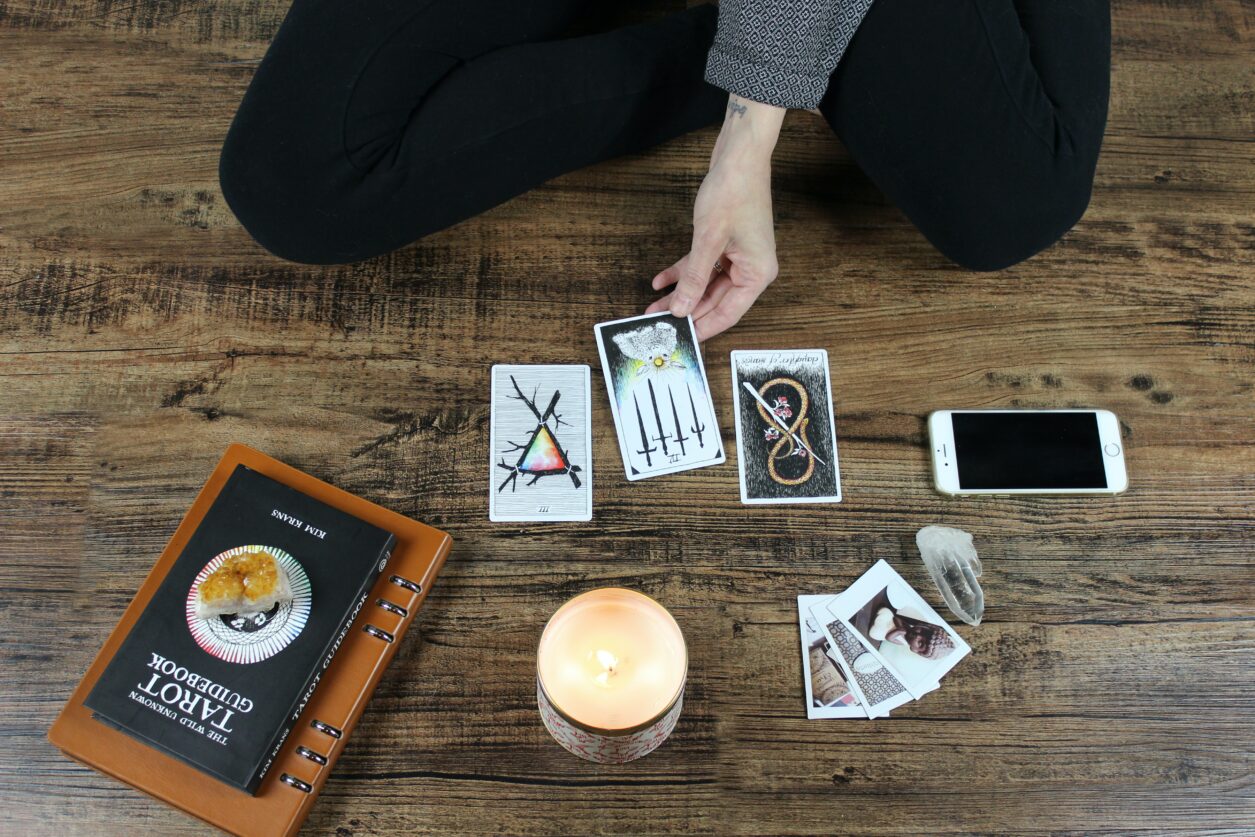
A journal helps you see how your understanding of tarot changes with practice. You can return to a reading after the moment has passed, compare an early impression with a later one, and remember connections you might otherwise forget.
Use a notebook, a ring binder or a digital document. Choose something you can reach easily when you sit down with your cards. If you enjoy drawing, leave room for sketches. If you prefer typing, use a format that lets you find earlier entries.
Record a reading while it is fresh
For each reading, write the date, your question and the cards you drew. If you used a spread, note each card’s position. Record whether you read reversed cards so that the entry makes sense when you revisit it.
Before looking up a meaning, describe your first reaction to the pictures. A figure’s expression, a patch of color or the direction someone faces may be what draws your attention. Keep those observations alongside the meaning you find in the guidebook or card library.
Then write your interpretation in your own words. Explain how you connected the card with the question and, in a spread, with its position. A short paragraph is enough if it records what you actually thought.
Use a daily or weekly draw
Draw a card and spend a few minutes with it. Note what you notice, what it means to you and how its themes might relate to your day. You can draw in the morning and return to the entry in the evening, or reflect on the day before drawing.
At the end of the day or week, add what happened and whether the card’s themes seemed relevant. Include occasions when you found no clear connection. Keeping a record of both helps you review your interpretations fairly.
Our guide to getting to know the tarot deck describes a manageable way to build this habit. You can also use a journal with the one-card spread when you want to explore a particular question.
Build notes for individual cards
Leave a section for each card or use tags in a digital journal. Collect the meanings you learn and the observations you make during readings. Label interpretations from a book or website with their source so you can distinguish them from your own ideas.
Record images, stories or lines of poetry that help you remember a card. A scene in a film might remind you of a card’s mood; an event in your life might help you understand one of its themes. Explain the connection instead of simply listing the reference.
If you work with several decks, note which deck you used. Differences in artwork may bring out different aspects of a familiar card.
Keep space for questions and experiments
Save spreads you want to try, including their position meanings. Record exercises, questions that remain unresolved and interpretations you want to explore further. You can also keep notes on your approach to tarot and how that approach develops.
Try one of the tarot practice exercises and write down what you learned from it. There is no need to complete every exercise or fill every section of your journal at once.
Return to earlier entries
When you revisit a reading, ask what you saw clearly and what you missed. Did you overlook part of the picture? Did a strong hope or worry influence your interpretation? Would you read the same cards differently now?
Add a dated note beside the original entry. Keeping your first interpretation lets you see the change. Your journal becomes a record of your practice, including the readings that were confusing and the ones that helped you understand something.