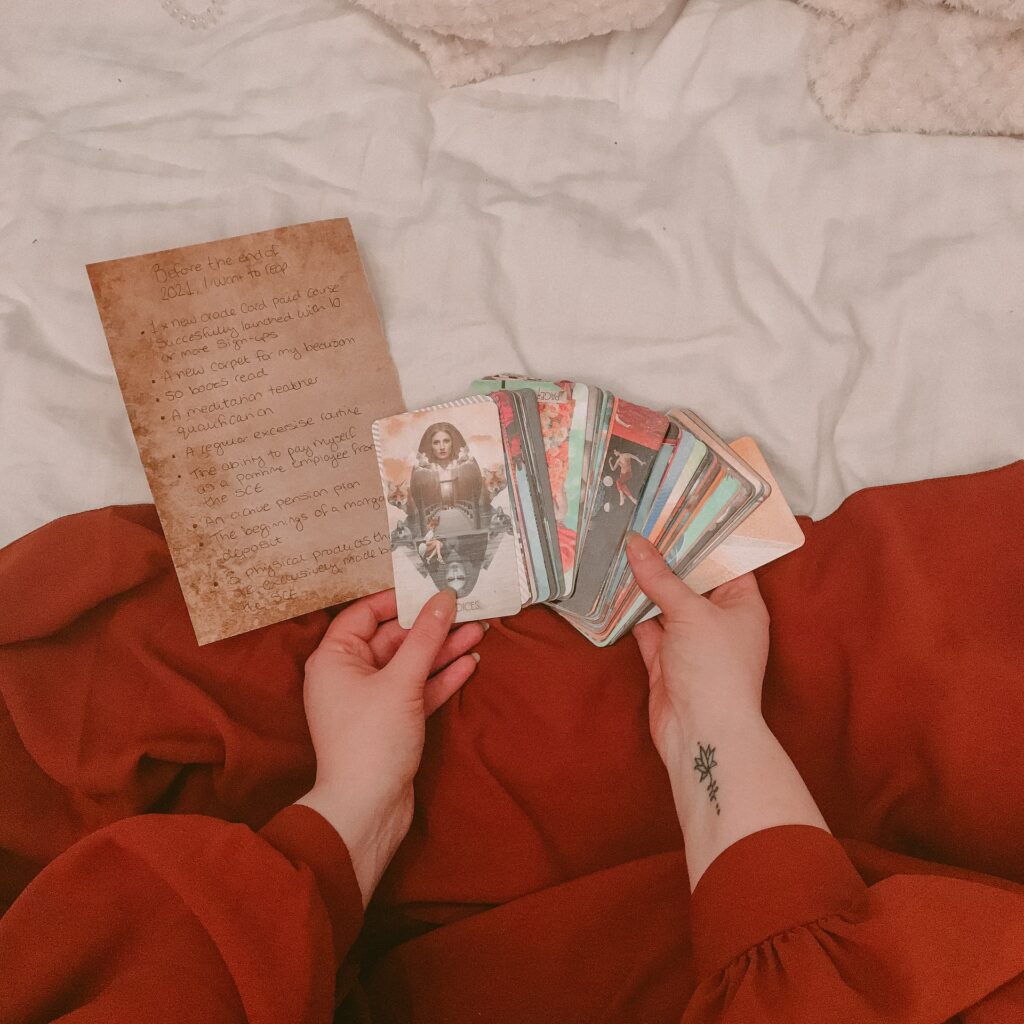
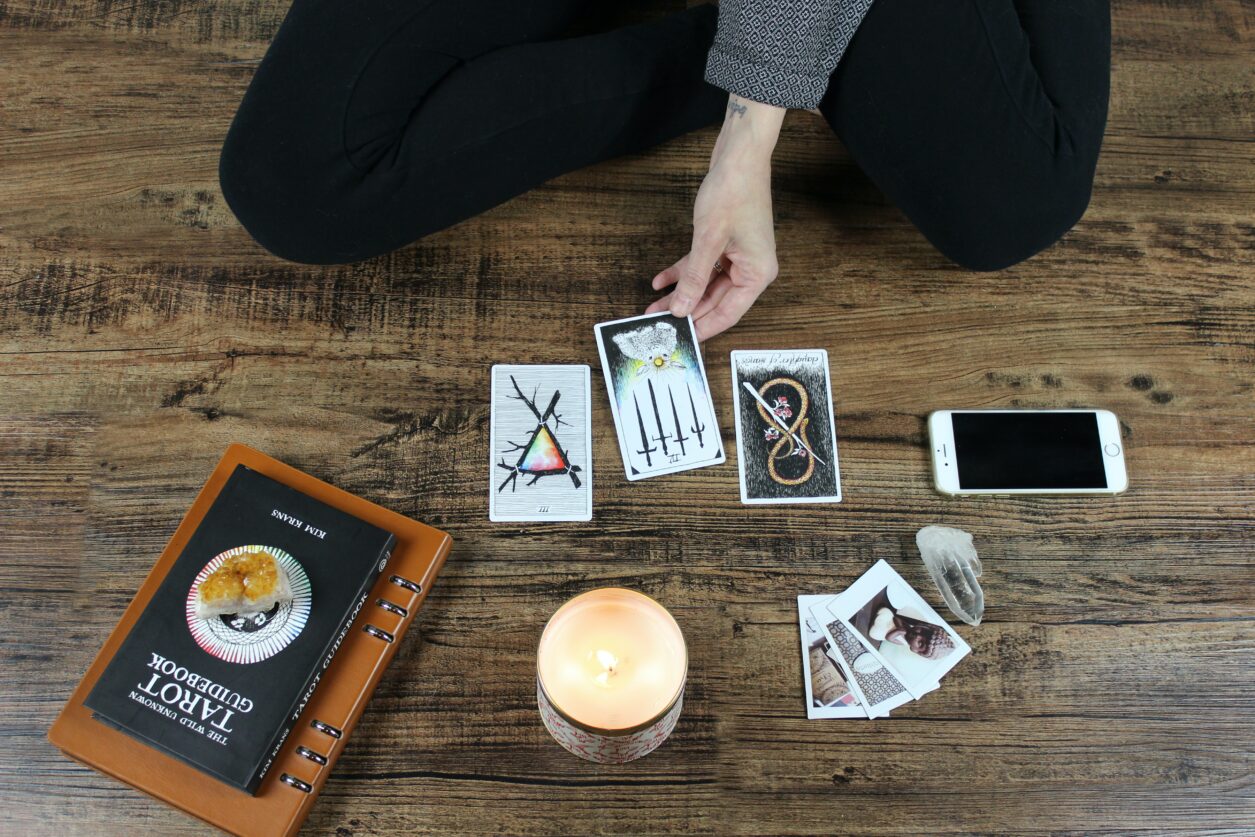
You can start practising tarot while you are still learning the card meanings. Looking closely at the pictures, trying an interpretation and reviewing it will give you something to build on the next time you read.
Choose an exercise you enjoy and keep notes in a tarot journal. You can work alone or with someone who understands that you are practising.
Draw one card each day or week
Shuffle your deck and draw a card. Before looking up its meaning, write down what you notice in the image. Describe the scene, its symbols and the feelings it brings up for you.
Read the card’s guide and add the meanings that seem relevant. If you draw The Hermit, for example, consider how the lantern, solitary figure and setting relate to reflection and inner guidance.
Return to the card at the end of the day or week. Did its themes help you notice anything about your experiences? Were some parts of the interpretation difficult to connect with your life? Record that too.
A weekly draw gives you more time to study one card. Choose a pace that you can maintain.
Explore the scene through your senses
Choose a card whose imagery interests or puzzles you. Imagine stepping into its scene and consider each sense:
- What can you see? Describe the landscape, colors, objects and people’s expressions.
- What might you hear? Think about movement, weather, conversation or silence.
- What scents might belong to this setting?
- What would the ground, clothing or objects feel like?
- Does the picture suggest a taste, such as fruit, a drink or salt in the air?
These are imaginative observations. Record them, then compare them with the card’s established symbolism. Notice which details helped you understand a meaning and which came from your own associations.
You can use this exercise when you feel stuck during a reading. Returning to the picture may give you a way to explain a card that a keyword alone did not.
Read for a fictional character
Choose a character from a book, film or play you know. Draw one card and imagine it describes the character at a particular moment in the story.
Ask what the picture suggests about their feelings, choices or difficulties. Which details seem to fit? What advice might the card offer them? If you draw another card, consider how the two change your interpretation of the scene.
This gives you a familiar situation to work with while practising how to connect card imagery with a question. You can check the traditional meanings afterward and see what they add.
Tell a story with several cards
Draw five to seven cards and place them in a row. Start a story from the first card, then let each following card introduce an event, person or change. Explain how the new card follows from the one before it.
If you are practising in a group, each person can draw a card and continue the story. Keep your interpretation connected to the imagery and meaning of the card you have drawn.
For instance, a court card can give a character a particular approach to a problem. The Queen of Cups might bring emotional understanding to the story. Describe what that person does and how it affects what happens next.
Try the exercise without a guidebook first, then look up any meanings you were unsure of. Compare what you read with the connections you made.
Move from exercises to a reading
When you want to practise with a question of your own, begin with a one-card spread. A three-card spread gives you more room to connect the cards through different positions. Record the question, cards and interpretation so you can review the reading later.