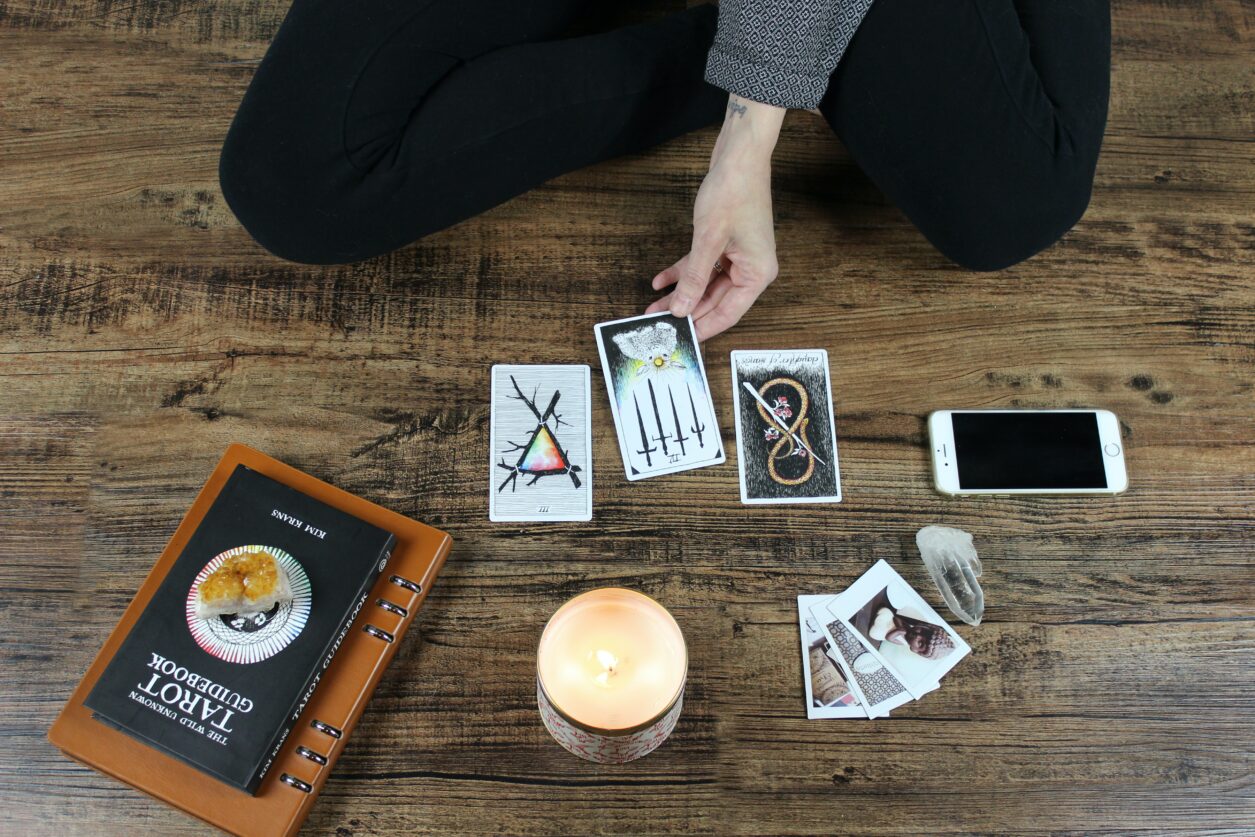
With a one-card spread, you draw a single card and read it in relation to a question or a theme for the day. The small layout gives you time to examine the image and consider its meaning without several other cards competing for your attention.
You can use it for a daily draw, a moment of reflection or a question with one clear focus. If you want to explore several aspects of a situation, the three-card spread gives each aspect its own position.
Choose a question or focus
Write down what you want to explore. A prompt such as “What quality do I need to develop today?” or “What can I understand about this obstacle?” gives you something to connect with the card.
For a daily draw, you might ask what deserves your attention during the day. Keep the question close while you read. Our guide to writing a tarot question gives examples of ways to make a question clear and open.
Shuffle and draw one card
Settle into a place where you can look at the card without rushing. Shuffle in a way that feels comfortable, then draw a card and place it face up.
If you read reversals, record the card’s orientation. If you are learning only upright meanings for now, keep that approach consistent for the reading.
Look at the picture before reaching for a guidebook. Describe the scene, the people or objects in it, and whatever draws your eye. Notice your first reaction, including a feeling or association you cannot yet explain.
Connect the card with your question
Read the card’s meaning and compare it with your observations. Which part fits the question? What detail in the picture helps you explain that connection?
For example, The Fool can bring new beginnings and a willingness to try something unfamiliar into a reading. If your question concerns a new project, consider what you are ready to begin and what you still need to pay attention to.
Write a few sentences in your own words. Keep the card, question and interpretation together so you can see how you reached your reading.
Notice how your expectations affect the reading
Reading for yourself can be difficult when you strongly want a particular answer. Before interpreting the card, write down what you hope it will say and what you fear it might say.
Then examine the picture and meaning again. Is there another interpretation that also fits? Can you explain why you chose one? This exercise helps you notice when a hope or worry is doing most of the work.
Keep both interpretations in your notes if the reading remains uncertain. You can return to them later.
Review a daily draw
At the end of the day, compare the card’s themes with what you experienced. Record any connection you noticed and anything that did not seem relevant. A daily draw becomes more useful for learning when you keep this second part of the practice.
Use a tarot journal to track your observations. If you enjoy studying the pictures, try the sensory exercise in our tarot practice guide before moving to a larger spread.