
Keywords
Upright: Burden, responsibility, hard work, pressure, accomplishment.
Reversed: Overload, avoiding responsibility, release, poor management.
Read the image
The burdened figure
Overwork and excessive responsibility. His commitment can accomplish a great deal, but it needs to remain connected with a life he can actually enjoy.
The bundled wands
Many drives, actions and interests have been brought together. The task is to distinguish them and decide what belongs in the same undertaking.
The tenfold load
A substantial packet of energy demands strength from the person carrying it. Giving everything can move a project forward or leave nothing for the person doing the work.
Overview
The Ten of Wands warns that responsibility has become too heavy to carry alone. You may expect relief after the next deadline, only to find another set of duties waiting. The work has filled so much of your life that you can no longer see beyond it.
In a reading, the card foretells a demanding period and asks you to lighten the burden. Achievement can create obligations as well as satisfaction. Success needs room to be enjoyed, and one consuming purpose may be crowding everything else out.
A Closer Look at the Ten of Wands
Description
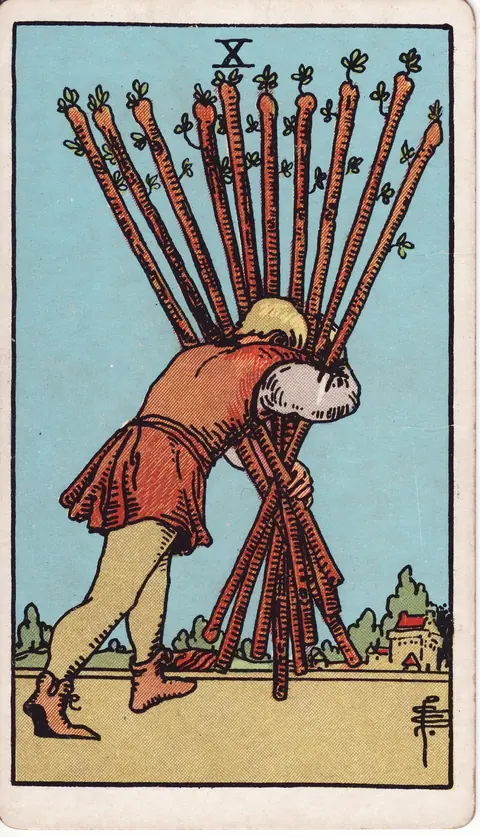
A man bends beneath a heavy bundle of ten wands. They crowd the space in front of his face, making it difficult to see where he is going. A town stands nearby, suggesting that his destination is within reach.
He appears to be carrying the fruits of a harvest to market. There is value in what he has gathered, but transporting it alone has become exhausting.
Meaning
The Ten of Wands gathers the whole undertaking into one burden, including its rewards and its difficulties. It marks completion and the beginning of another cycle. A pause is needed to enjoy the result and put down what is no longer yours to carry.
Upright
Upright, the Ten foretells pressure, hard work and a disproportionate share of responsibility. You may have to lead or manage the aftermath because nobody else is taking it on. Small gains can require more effort than usual.
Consider the project as a whole, including its beginnings and your motives. Completion should allow celebration and rest. Ask for help and release tasks where you can instead of treating exhaustion as proof of commitment.
Reversed
Reversed, the Ten can indicate a burden being released or responsibility being avoided. A promising undertaking may have suffered through poor management, selfish aims or a controlling influence.
In a difficult spread, it warns of treachery or an influence that threatens your creativity. Protect your ideas, health and happiness. The reversal asks whether the load is genuinely becoming lighter or merely being allowed to fall apart.
The Symbolism of the Ten of Wands
- The burdened figure: Overwork and excessive responsibility. His commitment can accomplish a great deal, but it needs to remain connected with a life he can actually enjoy.
- The bundled wands: Many drives, actions and interests have been brought together. The task is to distinguish them and decide what belongs in the same undertaking.
- The tenfold load: A substantial packet of energy demands strength from the person carrying it. Giving everything can move a project forward or leave nothing for the person doing the work.
- The blocked view: Immediate duties obscure the larger picture. Concentration is useful, provided you can still see the purpose and direction of your effort.
- The forward lean: Determination to reach a destination. It can also show an inability to put down difficulties, even when another way of carrying them exists.
- The house and town: Home, security, privacy and the culmination of work. They are the destination, but belonging can also arise within the effort itself.
- The yellow-dark ground: Light and shadow meet in the foundations. Realism recognises both opportunity and threat; mixed motives make the path harder to understand.
- The red-brown tunic: Instinct and practical dexterity, echoing the Knight of Wands’ horse. Its shadow is cunning or using others to further your own aims.
- The blue sky: Clear thought, willpower and spiritual joy remain available above the burden. Wishful thinking appears when you assume relief will arrive without changing the load.
Ten of Wands as Feelings
In a question about someone's feelings, Ten of Wands can describe affection weighed down by responsibility. Its orientation and position help explain how that emotional pattern is expressed.
Upright feelings
Affection weighed down by responsibility
The Ten of Wands can show someone feeling burdened within or around the connection. They may care deeply while carrying obligations that leave little energy for affection. The emotional question concerns how much they believe they must hold alone.
Reversed feelings
A wish to put down the burden
Reversed, the person may want relief, need to share responsibility or be avoiding a duty they cannot manage. Feelings can become difficult to express when overload is mistaken for lack of interest. Read what the burden actually consists of.
A hypothetical relationship reading
In a relationship challenge position, the Ten can indicate responsibilities that crowd out intimacy. A feelings position may still show attachment, while an action card explains what needs to be shared or released.
Read these feelings through the question and the card's position. The full love and relationship interpretations below explain how the same emotional pattern can affect a connection.
What the Ten of Wands Means in a Reading
Suppose a promotion leaves you doing both your old duties and the new role. Upright, the Ten of Wands shows achievement becoming an unsustainable load and asks for help or delegation. Reversed, it may predict a fairer division of work or warn that responsibilities are being abandoned.
The Nine of Wands faces a last test through endurance. The Ten carries the whole undertaking, while the Two of Pentacles tries to keep its competing demands in balance.
Meaning for Love and Relationships
Upright
If you are single, the Ten of Wands indicates that the timing is poor for a new relationship. Too many obligations have left little attention or energy for another person. Clear away commitments that no longer fit before deciding what you want from love.
In a partnership, you may be carrying most of the responsibilities while your partner remains less involved. Honest boundaries and a fairer division of duties are needed. The card calls for restored self-respect and shared participation.
Reversed
Reversed, the card can foretell responsibilities being shared and joy returning to the relationship. Your partner may take on more of the load, allowing closeness and spontaneity to grow again.
It can also indicate one or both partners abandoning their obligations. For singles, releasing burdens creates time for dating and the pleasure of meeting someone new. The distinction is whether the release brings balance or leaves necessary responsibilities unattended.
Meaning for Career
Upright
The Ten of Wands foretells excessive work, stress and exhaustion. The success you expected has brought more duties, and trying to do everything is threatening your career or business.
Delegation is needed. Clarify the work that is yours, communicate limits and train or involve others. That may create extra effort at first, but carrying tasks you cannot sustain will cost more over time. Give your abilities a workload they can serve well.
Reversed
Reversed, the Ten can indicate a lighter workload through delegation or a more effective way of working. The change restores balance and improves productivity.
Alternatively, you have taken on more than you can manage and are refusing to acknowledge it. Continuing through sheer force can lead to collapse under the responsibilities. The card asks whether you are finding a solution or only increasing the strain.
Meaning for Health and Well-Being
Upright
The Ten of Wands indicates that stress and responsibilities are weighing on your health. Caring for everyone else has left your own needs at the end of the list.
Make space for your care and ask for enough assistance to sustain it. Family, friends and colleagues can share duties. The card calls for relief from the burden, especially when a sense of obligation keeps you from admitting how much help you need.
Reversed
Reversed, the card can foretell improvement in symptoms as stress and burdens are reduced. In a difficult spread, it instead warns that signs have been neglected and exhaustion is approaching collapse or serious illness. It can also indicate the body succumbing to disease. Your own health needs priority and appropriate care.
Meaning for Finances
Upright
Financial obligations have become a heavy load. Debt and commitments may limit your freedom, and ignoring the effect of past decisions will make the burden harder to carry. The card calls for a plan to reduce the strain.
Simplifying possessions and routines can help. Selling things you no longer use may bring funds and reduce upkeep, while focusing on what you value makes spending easier to understand. The aim is a future with fewer obligations pressing on it.
Reversed
The reversed Ten can foretell financial burdens becoming manageable. A revised repayment arrangement or reduced commitments may bring welcome relief.
Its other meaning is obligations spiralling beyond control. Worry alone will not settle them. The surrounding cards show whether you are successfully reducing the load or need help to stop it from overwhelming you.
Ten of Wands and Other Cards
A neighbouring card can emphasise, complicate or change the direction of a reading. Compare what each card contributes before deciding how they connect.
The question gives the pair its context
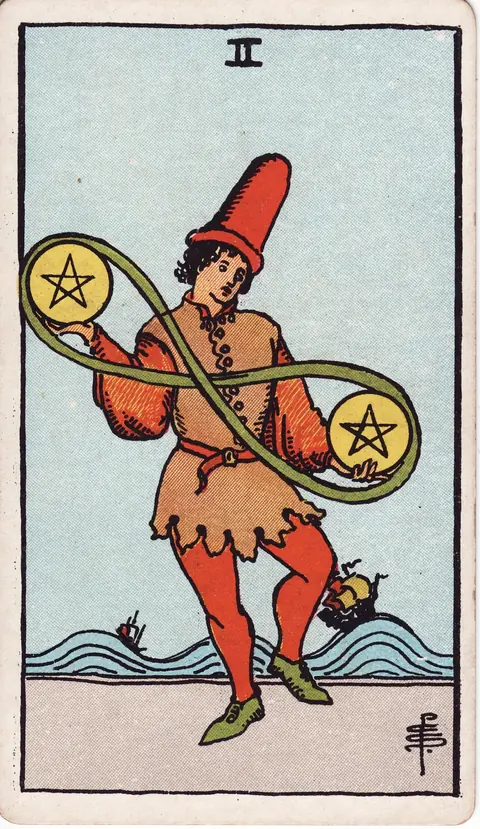
Ten of Wands brings burden, responsibility, hard work into the reading. Two of Pentacles adds movement, change, balance. In a spread, identify which card describes the situation and which describes a response, influence or outcome.
If either card is reversed, compare its reversed interpretation too. A reversal can alter whether a quality is available, obstructed or expressed in a difficult way. The meanings are connected through the question rather than simply added together.
Practise those connections with How to Read Tarot Card Combinations and a three-card spread.
Timing
The Ten of Wands foretells a significant idea being put into action in the coming days or weeks. Completion may be close, though responsibilities still have to be carried through or shared before relief arrives.
Dates associated with this card include December 13 to December 21.
Yes or No Questions
The answer is no. The Ten of Wands foretells pressure, restricted choices and a burden that is already too heavy. Be gentle with yourself and seek assistance. Adding another obligation is unlikely to improve the present situation.
Number and astrological correspondence
Saturn in Sagittarius gives a limiting Fire setting to the card’s accumulated responsibility and burden. Its Golden Dawn assignment is Saturn in Sagittarius, covering the third decan: 20 degrees up to, but not including, 30 degrees of that sign.
In the separate Tree of Life number system, the 10 belongs to Malkuth, Kingdom, shared by all four cards of this number. That comparison can bring attention to a concrete result, while the suit and scene explain this card’s particular expression.
The decan assignment comes from the Golden Dawn’s Book T. Use the complete tarot decan table to compare its neighbouring cards, or our numerology guide to compare the same number across the suits. A drawn card’s assignment does not establish a current planetary transit or an automatic calendar date.